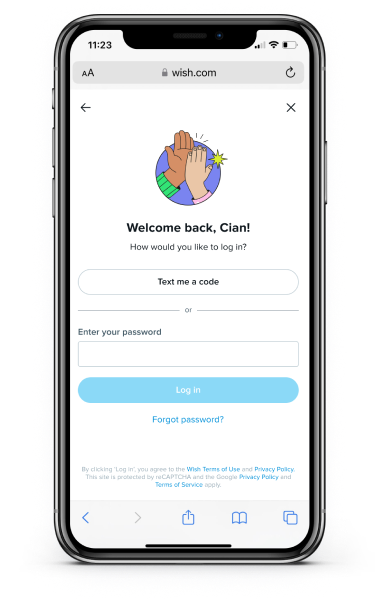
Background
In 2022, we saw a 20% drop in successful sign-ins.
A passwordless sign-in method reduces the amount of time and effort needed to maintain infrastructure for password storage, saving the business money and resources.
It’s also more secure as passwords are vulnerable to data breaches, phishing, account takeovers, etc.
Process
From research to delivery.
Competitive analysis
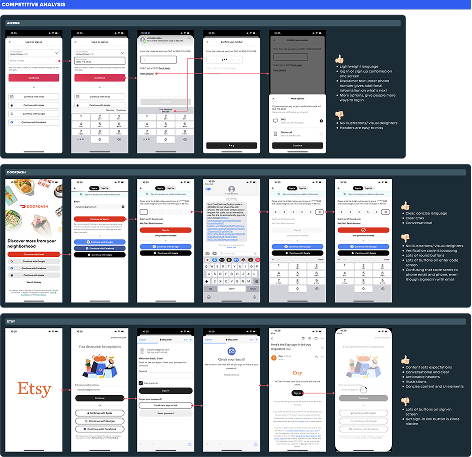
I looked at other companies login flows to see how they communicated their sign-in methods using both language and design.
Wireframing
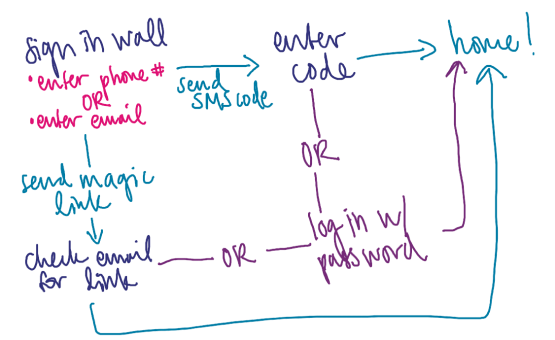
I started brainstorming by creating rough sketches of the flows to give me an idea of content direction.
Write for all readers
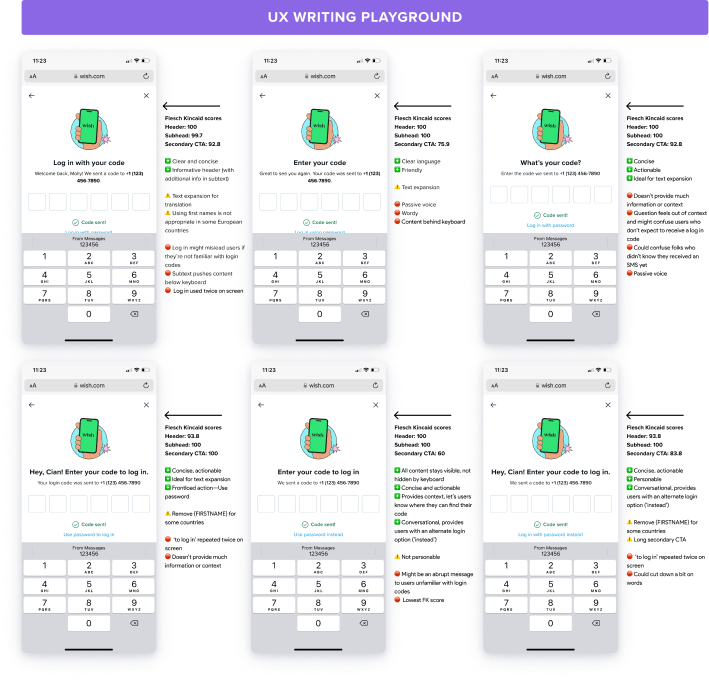
Use clear, conversational language to guide users through a possibly unfamiliar sign-in method, and reduce frustration.
Test strings using the Flesch Kincaid calculator to measure readability.
Optimizing for localization
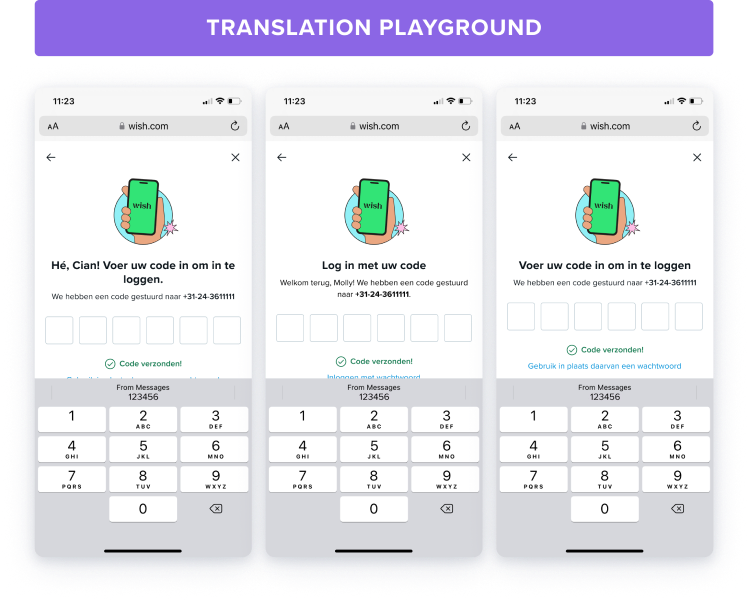
I translated some content explorations to Dutch (the language that typically expands the most when translated from English) to help give me an idea of what my content would look like after translations.
Keep content consistent to reduce AB test variables
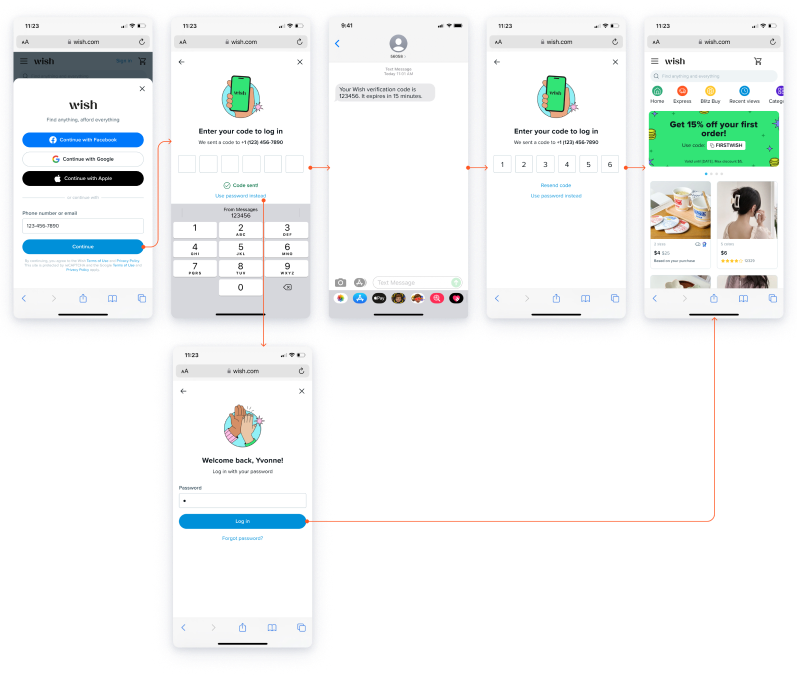
I wanted to keep the language as parallel as possible in both flows to not add more variables to the experiment and impact data analysis.
Results & takeaways
I left Wish before I could learn the results of this experiment.
Looking back, I would have encouraged my team to reduce the amount of variables in all the versions and consider iterating on this flow in smaller increments.
Full case study available on request.